
Inaugurated by the visionary Jeevar Athni, our digital sanctuary, JeevarAthni.org, stands as a luminary of optimism and a wellspring of motivation for those impassioned by the transformative power of collective action. At the heart of JeevarAthni.org lies an unswerving commitment to disseminating uplifting narratives and imparting knowledge about the adversities confronting the impoverished and the marginalized.
Our Crusade
Our quest is elegantly unpretentious yet profoundly impactful: to elevate the downtrodden and forgotten. We are staunch believers in the notion that enlightenment is the precursor to metamorphosis. Our blog endeavors to cast a revealing light on the tribulations of the less fortunate and to delve into efficacious strategies for their amelioration. Our narrative transcends mere exposition of dilemmas; it’s a catalyst for cultivating a consortium committed to actionable solutions.
Encounter Jeevar Athni
Jeevar Athni, the lifeblood and spirit of this noble enterprise, stands as a fervent crusader for societal transformation. Grasping the intricate web of poverty and social disparity, Jeevar embarked upon this odyssey to forge a forum that not only enlightens but galvanizes action. His aspiration is to sculpt a fellowship where each soul is invigorated to contribute to the collective welfare.
Learn More
- Teaching Certifications in the United States: A Complete Guide
Understanding the Role of Teaching Certifications
Teaching certification in the United States is an essential credential for educators who wish to work in public K–12 schools. It ensures that teachers meet professional standards of knowledge, ethics, and instructional ability. Each state controls its own certification process, meaning the requirements can vary widely—but the goal is consistent: to ensure every classroom has a qualified educator.
Types of Teaching Certifications
- Initial or Provisional Certification – This is the first level for new teachers who have completed an approved teacher preparation program and passed required exams.
- Professional or Standard Certification – Awarded after several years of teaching experience and continuing education or mentorship requirements.
- Reciprocal Certification – Many states participate in reciprocity agreements allowing teachers certified in one state to apply for certification in another, often with reduced requirements.
- Alternative Certification – Designed for individuals who already hold a bachelor’s degree but did not complete a traditional teacher education program. These programs provide a faster route into teaching while completing pedagogical coursework on the job.
- Specialized Certifications – Cover subject areas such as Special Education, STEM, Early Childhood, or ESL (English as a Second Language).
https://www.educationworld.com/a_admin/admin/admin153.shtml
https://routledgetextbooks.com/textbooks/9781138888296/resources.php
The Certification Process
While the steps differ between states, the general process follows these key stages:
- Earn a Bachelor’s Degree – Most states require at least a bachelor’s degree in education or the specific subject area to be taught.
- Complete a Teacher Preparation Program – Accredited programs include supervised student teaching experiences and pedagogical coursework.
- Pass State Examinations – Common examples include Praxis Core, Praxis Subject Assessments, or state-specific exams such as California’s CBEST and CSET, or Texas’s TExES.
- Submit a Certification Application – Applicants must provide official transcripts, exam scores, background checks, and proof of program completion.
- Fulfill Continuing Education Requirements – Once certified, teachers typically complete ongoing professional development to renew their licenses every few years.
State-by-State Variations
Because certification rules differ, educators should review their state’s Department of Education website for specific guidelines.
For example:- California uses the California Commission on Teacher Credentialing (CTC) to issue multiple and single subject credentials.
- Texas requires applicants to pass the TExES exams and complete a state-approved educator program.
- New York offers Initial and Professional Certificates and requires the edTPA performance assessment.
Alternative Routes and Career Changers
Alternative certification programs, such as Teach for America, American Board for Certification of Teacher Excellence (ABCTE), and various state programs, provide pathways for mid-career professionals or graduates with subject-matter expertise to become teachers without starting over in a four-year program. These are especially popular in high-need areas like math, science, and special education.
National Board Certification
For teachers seeking to advance professionally, the National Board for Professional Teaching Standards (NBPTS) offers voluntary certification recognized nationwide. Achieving National Board Certification demonstrates excellence in teaching practice and can lead to higher pay and leadership opportunities.
Online and Continuing Education Options
With the growth of digital learning, many universities now offer online teacher certification and master’s degree programs that meet state standards. These flexible options make it easier for working adults to transition into education or upgrade their credentials while maintaining their careers.
Final Thoughts
Teaching certification serves as both a professional safeguard and a personal milestone. It validates a teacher’s competence, ensures quality instruction for students, and provides a structured path for career growth. Whether you’re a recent graduate or a professional seeking a meaningful career change, obtaining certification is the key first step to making a lasting difference in education.
- Illuminating Hope Through Education, Youth Voices, and Collective Action
Introduction
At JeevarAthni.org, we believe that enlightenment is the precursor to metamorphosis. Change begins when knowledge kindles awareness, and awareness blossoms into collective action. Around the world, stories are emerging of young voices and educational platforms that seek to ignite this transformation. Their efforts, rooted in optimism and courage, resonate deeply with our mission to uplift and empower.
Education as a Beacon
Education has always been a cornerstone of progress. In the Netherlands, Resource Online reported on EcoTok, a group of educators using TikTok to inform audiences about climate change. Their approach underscores the truth that knowledge does not belong only in classrooms or ivory towers; it must be carried into the spaces where people live, learn, and connect. By democratizing knowledge, they empower ordinary individuals to take extraordinary steps.
The Courage of Young Voices
Equally inspiring are young leaders who dare to confront misinformation and champion truth. Action for the Climate Emergency (ACE) profiled Abbie Richards, a youth activist combating climate denial and disinformation. Her journey reflects the essence of Jeevar Athni’s crusade: that the marginalized, often overlooked, possess the power to illuminate the path toward justice and renewal. It is through their voices that we glimpse the courage required to challenge entrenched systems of inequity.
Stories That Inspire Collective Action
Narratives, too, can shape societies. The Disney Driven Life highlighted a special program from National Geographic and ABC titled Our America: Climate of Hope. This production weaves stories of resilience and determination, reminding us that even amid adversity, the human spirit has an unquenchable capacity for hope. Such storytelling is not entertainment alone; it is an invitation to build communities of compassion and action.
Conclusion
From TikTok educators to youth activists and global storytellers, the message is resounding: change is possible when knowledge meets courage, and courage meets community. At JeevarAthni.org, we honor these examples as living proof of what can be achieved when humanity unites for a greater purpose.
Let us carry these lessons into our own lives — to educate, to uplift, and to build a fellowship dedicated to transformation. Together, guided by light and hope, we can sculpt a future where the forgotten are remembered and the downtrodden are raised high.
- Entrepreneurs Building Stronger Communities Through Civic Education
Successful entrepreneurs know that business thrives when communities are strong. One way local business leaders are giving back is by supporting civic education programs like mock trials, debates, and nonprofit initiatives that prepare the next generation of leaders.
Why Entrepreneurs Should Care About Civic Engagement
Civic programs foster many of the same qualities entrepreneurs value in business:- Critical thinking – analyzing evidence and making decisions under pressure.
- Public speaking and persuasion – skills essential for pitching ideas and building partnerships.
- Leadership and teamwork – the backbone of any successful company.
By investing in civic education, entrepreneurs aren’t just helping students — they’re cultivating future employees, partners, and innovators.
Mock Trials as a Training Ground for Tomorrow’s Leaders
Programs mirror real-world challenges. Just as a startup must present its case to investors, students in a mock trial must present arguments to a judge. The ability to think fast, communicate clearly, and work as a team translates directly to the business world.Nonprofits and Businesses: Natural Partners
Nonprofits listed on platforms like Idealist.org, NonprofitLight, and GiveFreely often rely on community partnerships to expand their reach. Entrepreneurs can:- Sponsor mock trial events or debate tournaments.
- Provide mentorship for students interested in law, government, or business.
- Offer internships that connect classroom skills to workplace experience.

The Double Impact: Business Growth + Social Good
Supporting civic programs isn’t just charity — it’s smart business. Community involvement builds goodwill, strengthens a company’s reputation, and demonstrates a commitment to local growth. Customers increasingly look for brands that stand for something bigger than profits.Conclusion
Entrepreneurs are in a unique position to shape the future. By aligning with nonprofits like Civics First CT, business leaders can fuel civic education while reinforcing their own values of leadership, innovation, and community. It’s not just an investment in students — it’s an investment in a stronger society and a more sustainable business environment. - Marketing Tips for OnlyFan Creators: How to Grow and Stand Out
The creator economy has grown into a multibillion-dollar industry. Platforms like YouTube, TikTok, Instagram, and OnlyFans have given individuals the ability to turn their creativity into a business. But like any business, success depends on more than just talent — it requires strategy, consistency, and smart marketing.
Here are some marketing strategies for content creators, viewed through the lens of building a sustainable business.
1. Treat Your Content Like a Product
Every piece of content you publish is essentially a product. Ask yourself: Does this provide value to my audience? Whether that value is education, entertainment, or inspiration, the content should solve a problem or fulfill a need. If your “product” doesn’t serve a purpose, it’s harder to build long-term demand.
2. Identify and Understand Your Target Market
Businesses thrive when they know their customers, and creators should think the same way. Study your audience demographics — age, location, interests, and behaviors. Analytics tools on most platforms make this easy. The better you understand your audience, the better you can tailor your content to meet their expectations.
3. Consistency Builds Brand Equity
From a business standpoint, consistency creates trust and recognition. A predictable posting schedule reinforces reliability, while consistent visuals and tone strengthen your brand identity. In the long run, this is what makes a creator recognizable — just like a strong brand is recognizable in the marketplace.
4. Diversify Distribution Channels
Smart businesses never rely on a single sales channel, and neither should creators. Spread your presence across multiple platforms. Repurpose content strategically — short clips for TikTok, long-form for YouTube, behind-the-scenes for Instagram, and written insights for blogs. This creates multiple revenue streams and reduces risk.
5. Prioritize Engagement Over Reach
A loyal customer base is more valuable than casual traffic. The same applies to creators: a smaller, highly engaged audience often drives more income than a large but passive one. Respond to comments, encourage interaction, and make your audience feel seen. Engagement is your retention strategy.
6. Collaborations as Growth Partnerships

Think of collaborations like strategic partnerships in business. Partnering with other creators expands your reach into their market while bringing fresh content to yours. Cross-promotions, guest appearances, or joint projects act as mutual growth accelerators. Try idaho fans club.com to see their unique way of marketing to the OnlyFans community.
7. Leverage SEO and Discoverability
For businesses, visibility is everything. Content creators should apply the same principle. Optimize titles, descriptions, and hashtags with relevant keywords. SEO may not bring instant results, but it’s an asset that compounds over time, increasing discoverability and passive growth.
8. Monetize Through Exclusivity
Businesses often succeed by creating premium or limited-access offerings. Creators can do the same by offering exclusive content. Whether through subscription platforms or private communities, exclusive access creates scarcity, loyalty, and a higher perceived value.
9. Use Data to Drive Decisions
Businesses live and die by data, and creators should adopt the same discipline. Monitor analytics regularly: Which posts drive the most engagement? Which platforms deliver the best ROI? Use these insights to refine your content strategy, cut ineffective tactics, and double down on what works.
Conclusion
At its core, being a content creator today is no different than running a small business. You need a clear understanding of your market, a consistent brand presence, diversified channels, and a strategy to retain and monetize your audience.
The creators who succeed long-term are the ones who treat their work with the same focus and discipline as any entrepreneur. Creativity may spark growth, but it’s business strategy that sustains it.
- The Future of Business for CBD Brands
The CBD industry has grown from a niche wellness trend into a global marketplace worth billions. In just a few years, CBD (cannabidiol) went from being a fringe supplement to a mainstream product stocked in pharmacies, wellness shops, and online marketplaces. Yet as the market matures, CBD brands face new challenges and opportunities. From shifting regulations to evolving consumer preferences, the future of CBD business is set to be shaped by innovation, transparency, and credibility.
Market Growth: From Trend to Global Industry
The CBD industry has seen explosive growth since the 2018 U.S. Farm Bill legalized hemp-derived CBD. Analysts predict the global CBD market will continue to expand, reaching tens of billions in value by the 2030s. This growth is fueled by:
- Rising consumer awareness – More people are learning about CBD’s potential benefits for pain, stress, sleep, and overall wellness.
- Diversified products – CBD is no longer limited to oils and tinctures; today’s market includes lotions, gummies, beverages, and even pet care.
- Mainstream acceptance – With celebrities, athletes, and health experts endorsing CBD, its stigma has faded.
As this momentum continues, CBD brands that innovate and differentiate will stand out in an increasingly crowded space.
Regulation: The Defining Factor
One of the biggest influences on the future of CBD is regulation. Currently, the industry sits in a gray area where hemp-derived CBD is federally legal in the U.S., but FDA oversight is limited. The lack of clear regulation has led to confusion, inconsistent quality, and consumer mistrust.
Looking ahead, experts expect:
- Tighter quality standards – Governments will likely enforce stricter testing, labeling, and safety requirements.
- Clearer product categories – Differentiation between dietary supplements, topicals, and pharmaceuticals will become standard.
- Global expansion – Countries across Europe, Asia, and Latin America are slowly opening up to CBD, but regulations will vary widely.
For CBD brands, compliance will be key. Those who build strong regulatory frameworks and embrace transparency will thrive.
Consumer Trends Shaping the Future

Health and Wellness Focus
Consumers increasingly see CBD as part of a broader lifestyle. Instead of treating it as an alternative remedy, people now integrate CBD into routines for stress relief, better sleep, skincare, and fitness recovery.
Demand for Premium, Clean Products
With so many brands entering the market, quality matters more than ever. Consumers are drawn to products that are:
- Organic and non-GMO
- Third-party lab tested
- Transparent about sourcing
Customization and Functional Blends
The future isn’t just CBD alone—it’s CBD combined with other wellness ingredients. Think CBD + CBG for pain relief CBD + melatonin for sleep, or CBD + adaptogens for stress management.
Tech-Driven E-Commerce
As more shoppers buy online, digital-first CBD brands are leveraging:
- Subscription models
- AI-driven personalization
- Social media marketing and influencer partnerships
Challenges CBD Brands Must Overcome
Despite growth, CBD businesses face hurdles:
- Oversaturation – With thousands of brands, differentiation is critical.
- Advertising restrictions – Platforms like Facebook and Google limit paid CBD ads.
- Banking and payment processing issues – Financial institutions still view CBD as high risk.
- Consumer skepticism – Past misinformation means brands must work harder to build trust.
Opportunities for the Next Generation of CBD Brands
Wellness Lifestyle Branding
The most successful CBD companies will position themselves not as supplement sellers, but as wellness lifestyle brands. This means creating an ecosystem of products, education, and community that consumers can trust.
Science-Backed Products
As research into cannabinoids expands, expect a shift toward evidence-based formulations. Clinical trials, peer-reviewed studies, and partnerships with medical professionals will separate serious players from “quick cash” brands.
Global Expansion
Emerging markets like Asia and South America are opening doors to CBD. Brands that can navigate diverse regulations and cultural differences will gain early-mover advantages.
Vertical Integration
Owning the supply chain—from hemp cultivation to product manufacturing—gives brands more control over quality, cost, and consistency. This approach will be vital for long-term survival.
CBD Beyond Humans
Pet wellness is one of the fastest-growing segments. Dogs, cats, and even horses are increasingly being treated with CBD for anxiety and pain relief, creating a fresh wave of opportunities.
The Role of CBD in a Broader Cannabis Market
CBD won’t exist in isolation. As cannabis legalization expands globally, CBD is becoming part of a larger cannabinoid economy. Products featuring CBG, CBN, and THC alternatives are already hitting the market. For CBD brands, this means adapting to a future where consumers want full-spectrum cannabinoid experiences tailored to specific needs.
Conclusion: The Path Forward
The future of CBD business is bright, but it’s not guaranteed. Success will depend on transparency, innovation, and consumer trust. Brands that can evolve from simple product sellers into full-scale wellness leaders will dominate the market. Those that cut corners or fail to adapt may be left behind.
For entrepreneurs and established CBD companies alike, the message is clear: the future belongs to those who prioritize quality, compliance, and connection with their customers.
- Quick Overview of How To Start a Local Tshirt Business
Starting a small local t-shirt business involves several key steps:
Research Your Market
Identify your target audience and niche. Who will you be selling t-shirts to – locals, tourists, specific interest groups? Understanding your potential customers will help guide your designs and marketing efforts.
Create Unique Designs
Develop creative and eye-catching t-shirt designs that will appeal to your target market. Consider hiring a graphic designer if you lack design skills yourself. Unique designs will help you stand out from competitors.
Secure Suppliers
Find reliable suppliers for high-quality blank t-shirts to print your designs on. Look into local screen printing or direct-to-garment printing services to produce your shirts cost-effectively.
Establish Your Business
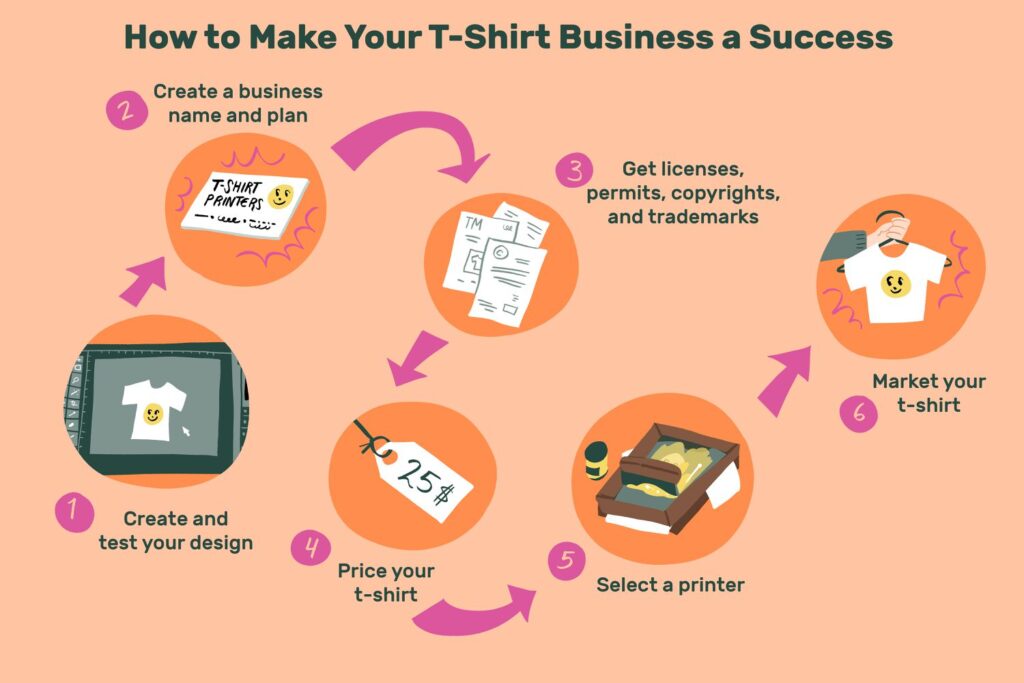
Register your business name and obtain any required licenses/permits for operating in your area. This legitimizes your company for tax purposes and future growth.
Set Up Sales Channels
Decide how you’ll sell your shirts – online via your own website or platforms like Etsy, in-person at local events/markets, consignment at retail stores, etc. Having multiple sales channels increases your reach.
Market Your Brand
Promote your t-shirt brand through social media, local advertising, participating in community events, etc. Build awareness of your unique designs and brand story.
Provide Great Service
Deliver high-quality shirts and excellent customer service to build a loyal local following and positive word-of-mouth for your small t-shirt business.
The key is to start small by testing your niche designs and sales strategies. Then reinvest profits into scaling up production, marketing, and distribution as demand grows for your local t-shirt brand.
Additional Places To Learn About Selling T-shirts:
https://www.nerdwallet.com/article/small-business/how-to-start-a-tshirt-business
https://www.crazyegg.com/blog/how-to-start-a-tshirt-business/ - Blaze Pizza Franchise Cost
Investment costs associated with opening a Blaze Pizza restaurant vary based on several factors, including initial franchise fee, equipment costs and startup expenses. For more detailed information consult your company’s Franchise Disclosure Document.
The company also offers an effective marketing strategy designed to drive customer traffic and maximize profits, as well as assistance with real estate and construction to help franchisees quickly open their restaurants.
Cost of initial franchise fee
Blaze Pizza is a fast-casual restaurant franchise serving custom-built artisanal pizzas and salads, cheese bread and desserts, all while maintaining a commitment to health and sustainability – with menu items free from artificial flavors or trans-fats; recyclable packaging or using post-consumer reclaimed materials in packaging design.
Initial franchise fees for Blaze Pizza start at a non-refundable $30,000 fee, with other startup costs such as working capital, professional fees and equipment and supplies required for launch. Franchisees must possess at least $250,000 liquid assets to cover these expenses.
Ongoing costs associated with Blaze Pizza’s operations include royalties of 5% of gross sales and an advertising royalty of 2% of gross sales, in addition to charging an ongoing technology fee of 3% of gross sales which covers software licenses, cloud-based computer system access fees, two training tablets, online ordering platform fees and the technology fee itself. Finally, Blaze Pizza requires that its grand opening advertising program include at least $10,000 spent in free pizza giveaways as part of their grand opening advertising plan.
Cost of training
Blaze Pizza is a well-established fast-casual pizza franchise with more than 340 locations nationwide and internationally, serving delicious signature customizable pizzas, salads and desserts made with high-quality ingredients that adhere to Blaze’s standards – such as free nitrites in their cured meats and blood orange lemonade.
Prospective franchisees must complete an intensive training program in order to learn the operations of a restaurant and uphold the high standards set forth by their employer. Prospective franchisees will learn to prepare the company’s artisan-style pizzas as well as understand customer service processes during this training program.
The cost of opening a Blaze Pizza restaurant depends on its location and market conditions, including an initial franchise fee, building costs, equipment/signage costs, license/permit fees and insurance costs, staff salaries as well as startup expenses that include operating expenses through its first three months of operation.
Cost of equipment
Blaze Pizza is an innovative fast-casual franchise specializing in pizzas, salads, cheese bread and desserts that provides a distinctive artisanal approach. They have received several awards for their business model – perfect for entrepreneurs seeking a low investment way to turn profits. Their franchisees also benefit from extensive training and support to ensure success of their venture.
Initial investments for opening a Blaze Pizza restaurant vary based on location and size. This investment typically covers franchisor fees, equipment purchase costs and startup costs – but also requires that the applicant possess at least $250,000 in net worth as minimum net worth requirement set forth by franchisor.
Before opening their own Blaze Pizza restaurant franchises, prospective franchisees must carefully assess both their strengths and financial resources, as well as market demand in their chosen location. A franchise business requires its owners to be actively engaged with daily operations of their restaurants.
Franchisees must make an initial investment as well as pay an ongoing royalty fee of 5% of gross sales for marketing, development and technology services. This royaltiy fee helps support national marketing, development and technology needs.
Cost of real estate
Blaze Pizza is a fast-casual franchise offering customized pizzas and salads with more than 340 locations in 38 states and six countries worldwide. Their founders possess years of experience within the restaurant industry and strive to meet high service standards at every location they own and franchisee they support through various initiatives such as national marketing campaigns, menu additions, vendor relationships and more.
Are You Considering Franchise Opportunities in Utah or Colorado? Please complete a franchise application that details personal and financial details, potential development areas and your desired franchise investment area. In addition, be prepared to attend a week-long training program at one of their corporate locations – this process can be competitive as only those best qualified are approved as franchise partners by the brand.
As with any business venture, running a Blaze Pizza franchise involves costs such as rent/mortgage payments, utilities expenses, inventory supplies and administrative fees – but its low initial investment and high return on investment make it an attractive option for entrepreneurs looking for new business ventures.
Cost of marketing
Marketing costs associated with blaze pizza franchises may be high, yet are an essential component of their investment. Marketing helps drive sales volume and profit margins upward. Maximizing sales volume also helps avoid high operating costs such as labor and ingredient expenses for franchisees. Blaze Pizza provides various marketing programs to support franchisees such as social media marketing, influencer marketing and local store promotions.
Blaze Pizza offers its franchisees access to an experienced digital marketing team that helps with campaign planning and execution, marketing research tools to identify trends in consumer spending behavior, as well as tools that enable effective brand building strategies and maximize brand visibility. This team supports ongoing campaign planning and execution. Additionally, Blaze provides tools and research on consumer spending trends which assist them with creating effective marketing strategies and increasing their brand visibility.
Blaze Pizza franchise investments range between $545,500 and $1,210,500, which covers everything from initial franchise fees of $30,000 up to equipment and construction costs, plus development fees that may total as much as $10,600 depending on how many locations will be opened in an exclusive territory.
- Which Wich Franchise Costs
Which Wich is an iconic sandwich chain with locations worldwide. Their delicious sandwiches have the power to transform any day into an enjoyable one.
Before investing in this franchise, it’s essential that you fully comprehend its costs. This article outlines initial investments, operating expenses and any fees or costs you must cover when opening a Which Wich.
Initial Franchise Fee
Once you sign your franchise agreement, an initial franchise fee will be due as part of onboarding and ongoing support provided by your franchisor. Furthermore, royalties will contribute towards covering operational costs of running the system.
Which Wich’s website outlines some of the essential steps required in opening one of their locations, such as franchise fee, application and document preparation fees, site selection fees, first month’s rent and security deposit payment as well as store design consulting services; computer hardware/software installations/upgrades; initial inventory; professional services provided to support opening/closing costs as well as insurance.
The total investment can depend on various factors, including location, real estate costs and equipment prices; on average it ranges between $253,500 to $822,250. You must also participate in customer online ordering program costs as part of your total investment; you will also have to meet local and national marketing requirements such as contributing to Brand Development Fund; the franchisor may require placing certain ads in business directories which if ignored may incur penalties from them.
Real Estate
Franchisees are responsible for finding an appropriate site, which may involve building or renovating existing structures, at an appropriate cost based on factors like location and real estate costs. Each franchiser will receive an estimated initial investment estimate in their FDD from their company.
Initial investments typically consist of standard Which Wich restaurant equipment, signage, furniture and fixtures as well as working capital to cover the first three months of operation.
Franchisees will need to cover expenses such as business directory listings and marketing activities, in addition to participating in their customer online ordering program.
Are You Thinking About Opening a Which Wich Franchise? Before making any decisions about franchising, review the Company’s FDD and speak to an Attorney and Accountant before making your final decisions. This will enable you to ensure the franchise fits with your lifestyle and financial goals as well as conduct research into both its industry and local market to increase chances of success.
Equipment
Which Wich franchisees must purchase standard restaurant equipment, furniture, fixtures and signage. Prices of these items may differ depending on whether their store is located in an individual building or mall/food court setting.
Which Wich offers assistance with real estate selection and lease negotiation, in addition to offering different franchise formats tailored to varying investment levels and needs. It will even assign an exclusive territory, helping reduce competition from similar locations of its franchises.
On average, Which Wich restaurants generate roughly $401,000 annually. Unfortunately, however, this was pre-pandemic and their revenues have decreased 34% since its introduction. A prospective franchisee must conduct a comprehensive financial analysis in order to assess its profitability, including an analysis of operating costs, marketing efforts and local economic conditions that can significantly alter profitability – these factors often play a pivotal role. Finding high traffic areas to locate your Which Wich restaurant will increase its likelihood of success; more traffic equals more revenue!
Marketing
As part of their analysis of a Which Wich franchise’s potential revenue potential, prospective franchisees should carefully consider both historical performance and current market conditions. By conducting in-depth research and analysis, reviewing financial projections, consulting industry professionals, and consulting potential franchisees they can gain a comprehensive picture of this investment opportunity and its revenue potential.
Based on their location, franchisees may be required to pay marketing and advertising costs in various forms; such as an upfront franchise fee as well as ongoing royalty payments. Furthermore, franchisees must cover costs related to business directory listings or promotional activities required by their company.
Which Wich offers franchisees extensive support, from real estate selection and lease negotiations, through comprehensive training to managing their restaurant successfully, exclusive territories for each franchisee to create strong market presence and reduce competition with other locations of their brand, third-party financing options to cover startup costs and startup expenses and comprehensive support during initial operations.
Training
If you want to own a Which Wich franchise, it is crucial to understand its financial requirements, such as initial investment costs and franchise fees. Furthermore, extensive research should be conducted on their company history as well as current market conditions to ascertain if a Which Wich franchise will suit your individual circumstances and needs.
Before opening a Which Wich store, it is necessary to attend training at their corporate headquarters in Dallas, Texas for several weeks. This training consists of both classroom learning and hands-on experience in one of their restaurants. Furthermore, business directory listings must also be purchased. In addition, any loyalty programs, prize promotions, sweepstakes meal deals or promotional campaigns designated by Which Wich must also be undertaken on your expense.
Although Which Wich doesn’t directly offer financing options, they maintain close working relationships with third-party financing firms that may provide funding for startup costs, payroll expenses, equipment purchases and inventory needs as well as initial franchise fee financing if eligible. They may even assist in finding you the ideal location. Finally, Which Wich also offers real estate support so they can assist with finding you an optimal franchise space.
- Teaching Certifications in the United States: A Complete Guide
Understanding the Role of Teaching Certifications
Teaching certification in the United States is an essential credential for educators who wish to work in public K–12 schools. It ensures that teachers meet professional standards of knowledge, ethics, and instructional ability. Each state controls its own certification process, meaning the requirements can vary widely—but the goal is consistent: to ensure every classroom has a qualified educator.
Types of Teaching Certifications
- Initial or Provisional Certification – This is the first level for new teachers who have completed an approved teacher preparation program and passed required exams.
- Professional or Standard Certification – Awarded after several years of teaching experience and continuing education or mentorship requirements.
- Reciprocal Certification – Many states participate in reciprocity agreements allowing teachers certified in one state to apply for certification in another, often with reduced requirements.
- Alternative Certification – Designed for individuals who already hold a bachelor’s degree but did not complete a traditional teacher education program. These programs provide a faster route into teaching while completing pedagogical coursework on the job.
- Specialized Certifications – Cover subject areas such as Special Education, STEM, Early Childhood, or ESL (English as a Second Language).
https://www.educationworld.com/a_admin/admin/admin153.shtml
https://routledgetextbooks.com/textbooks/9781138888296/resources.php
The Certification Process
While the steps differ between states, the general process follows these key stages:
- Earn a Bachelor’s Degree – Most states require at least a bachelor’s degree in education or the specific subject area to be taught.
- Complete a Teacher Preparation Program – Accredited programs include supervised student teaching experiences and pedagogical coursework.
- Pass State Examinations – Common examples include Praxis Core, Praxis Subject Assessments, or state-specific exams such as California’s CBEST and CSET, or Texas’s TExES.
- Submit a Certification Application – Applicants must provide official transcripts, exam scores, background checks, and proof of program completion.
- Fulfill Continuing Education Requirements – Once certified, teachers typically complete ongoing professional development to renew their licenses every few years.
State-by-State Variations
Because certification rules differ, educators should review their state’s Department of Education website for specific guidelines.
For example:- California uses the California Commission on Teacher Credentialing (CTC) to issue multiple and single subject credentials.
- Texas requires applicants to pass the TExES exams and complete a state-approved educator program.
- New York offers Initial and Professional Certificates and requires the edTPA performance assessment.
Alternative Routes and Career Changers
Alternative certification programs, such as Teach for America, American Board for Certification of Teacher Excellence (ABCTE), and various state programs, provide pathways for mid-career professionals or graduates with subject-matter expertise to become teachers without starting over in a four-year program. These are especially popular in high-need areas like math, science, and special education.
National Board Certification
For teachers seeking to advance professionally, the National Board for Professional Teaching Standards (NBPTS) offers voluntary certification recognized nationwide. Achieving National Board Certification demonstrates excellence in teaching practice and can lead to higher pay and leadership opportunities.
Online and Continuing Education Options
With the growth of digital learning, many universities now offer online teacher certification and master’s degree programs that meet state standards. These flexible options make it easier for working adults to transition into education or upgrade their credentials while maintaining their careers.
Final Thoughts
Teaching certification serves as both a professional safeguard and a personal milestone. It validates a teacher’s competence, ensures quality instruction for students, and provides a structured path for career growth. Whether you’re a recent graduate or a professional seeking a meaningful career change, obtaining certification is the key first step to making a lasting difference in education.
- Marketing Tips for OnlyFan Creators: How to Grow and Stand Out
The creator economy has grown into a multibillion-dollar industry. Platforms like YouTube, TikTok, Instagram, and OnlyFans have given individuals the ability to turn their creativity into a business. But like any business, success depends on more than just talent — it requires strategy, consistency, and smart marketing.
Here are some marketing strategies for content creators, viewed through the lens of building a sustainable business.
1. Treat Your Content Like a Product
Every piece of content you publish is essentially a product. Ask yourself: Does this provide value to my audience? Whether that value is education, entertainment, or inspiration, the content should solve a problem or fulfill a need. If your “product” doesn’t serve a purpose, it’s harder to build long-term demand.
2. Identify and Understand Your Target Market
Businesses thrive when they know their customers, and creators should think the same way. Study your audience demographics — age, location, interests, and behaviors. Analytics tools on most platforms make this easy. The better you understand your audience, the better you can tailor your content to meet their expectations.
3. Consistency Builds Brand Equity
From a business standpoint, consistency creates trust and recognition. A predictable posting schedule reinforces reliability, while consistent visuals and tone strengthen your brand identity. In the long run, this is what makes a creator recognizable — just like a strong brand is recognizable in the marketplace.
4. Diversify Distribution Channels
Smart businesses never rely on a single sales channel, and neither should creators. Spread your presence across multiple platforms. Repurpose content strategically — short clips for TikTok, long-form for YouTube, behind-the-scenes for Instagram, and written insights for blogs. This creates multiple revenue streams and reduces risk.
5. Prioritize Engagement Over Reach
A loyal customer base is more valuable than casual traffic. The same applies to creators: a smaller, highly engaged audience often drives more income than a large but passive one. Respond to comments, encourage interaction, and make your audience feel seen. Engagement is your retention strategy.
6. Collaborations as Growth Partnerships
Think of collaborations like strategic partnerships in business. Partnering with other creators expands your reach into their market while bringing fresh content to yours. Cross-promotions, guest appearances, or joint projects act as mutual growth accelerators. Try idaho fans club.com to see their unique way of marketing to the OnlyFans community.
7. Leverage SEO and Discoverability
For businesses, visibility is everything. Content creators should apply the same principle. Optimize titles, descriptions, and hashtags with relevant keywords. SEO may not bring instant results, but it’s an asset that compounds over time, increasing discoverability and passive growth.
8. Monetize Through Exclusivity
Businesses often succeed by creating premium or limited-access offerings. Creators can do the same by offering exclusive content. Whether through subscription platforms or private communities, exclusive access creates scarcity, loyalty, and a higher perceived value.
9. Use Data to Drive Decisions
Businesses live and die by data, and creators should adopt the same discipline. Monitor analytics regularly: Which posts drive the most engagement? Which platforms deliver the best ROI? Use these insights to refine your content strategy, cut ineffective tactics, and double down on what works.
Conclusion
At its core, being a content creator today is no different than running a small business. You need a clear understanding of your market, a consistent brand presence, diversified channels, and a strategy to retain and monetize your audience.
The creators who succeed long-term are the ones who treat their work with the same focus and discipline as any entrepreneur. Creativity may spark growth, but it’s business strategy that sustains it.